
13 Oct, 2026
13 Aug, 2026
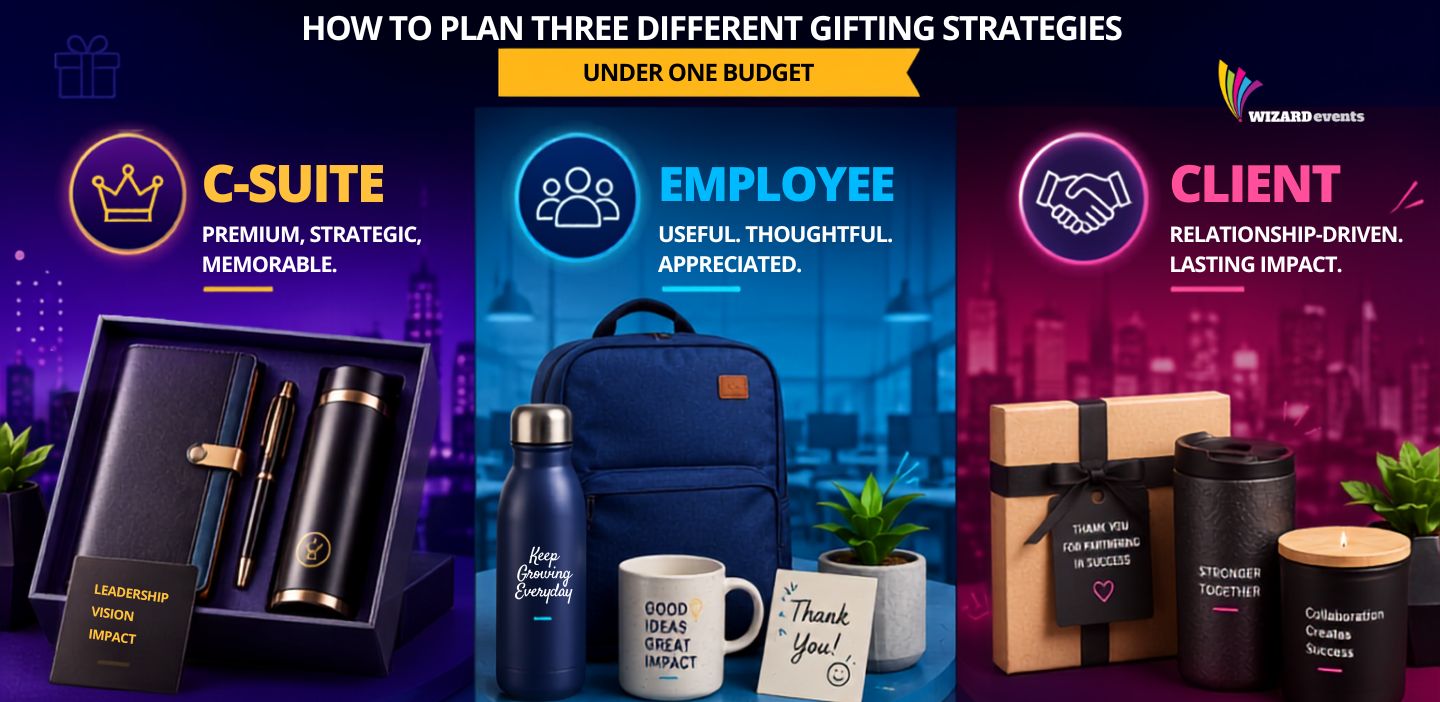
Most businesses approach corporate gifting with a single budget and concept, then wonder why the client gift received nothing more than a courteous thank-you, the MD was unimpressed, and the new hires hardly noticed. The budget is not the issue. The issue is applying the same gifting rationale to three quite distinct relationships. A high-value client, a floor-level employe, and a C-suite executive are not the same recipients, and a present that works for one of them will actively fail for the other two. Here's how to prepare all three methods without sacrificing any of them with a single budget.
Why Does One-Size-Fits-All Corporate Gifting Stop Working?
One-size-fits-all corporate giving becomes ineffective the instant your recipient realizes it was not made for them. And receivers always notice.
In 2025, India's corporate giving industry is expected to exceed ₹14,000 crore, indicating that firms view gifting as a strategic investment rather than a seasonal formality. However, the most typical complaint from employes and clients across Indian organizations is that the gifts they get appear generic. A hamper that might have come from any firm, addressed to anybody, and bears no indication of the connection it is meant to commemorate.
Tiering is the change that distinguishes firms with great giving cultures from those that merely click a budget line: each recipient category is designed with a distinct brief, budget allocation, and outcome in mind.
How Should You Allocate a Corporate Gifting Budget Across Three Recipient Groups?
1. What is the right budget split between C-suite, employees, and clients?
Industry data gives a clear starting framework. Companies that manage gifting strategically typically allocate their total gifting budget as follows:
40 to 50% for C-suite executives and high-value clients — the relationships that carry the highest commercial and reputational weight.
30 to 35% for mid-level and senior employees — the people whose engagement and retention directly drive performance.
20 to 25% for general employee gifting and onboarding — the broad base that shapes culture and belonging.
This is not a rigid formula — it flexes based on your headcount, client portfolio, and occasion. But it gives you a working structure before a single gift is sourced. Without this allocation decision made upfront, most gifting budgets drift toward the middle — spending a moderate amount on everyone and impressing nobody.
How do you gift a senior leader or MD without it feeling transactional?
C-suite gifting is the highest-stakes gifting category — and the most commonly mishandled. Senior leaders receive the most gifts and have the highest expectations. They also have the most acute sense of whether a gift was thoughtfully chosen or bulk-ordered.
What works for C-suite executives in India:
Ultra-premium single items over multi-item hampers. A beautifully crafted leather portfolio, a handmade artisanal item, a limited-edition product — one exceptional thing communicates more than ten generic ones.
Named personalisation — not just the company logo. Engraving the recipient's name, initials, or a personalised message signals that someone made a decision specifically for them. This is the detail that separates a gift that gets kept from one that gets passed on.
Experience-based gifting — a curated weekend experience, a premium dining reservation, or a luxury wellness package. For a leader who can buy anything they need, an experience they would not organise for themselves is a genuinely memorable gift.
Budget range: ₹15,000 to ₹50,000 and above for C-suite and key account relationships. Client gifts in this tier generally range from ₹5,000 to ₹20,000 for standard relationships and from ₹15,000 to ₹50,000 or more for strategic accounts.
As a corporate gifting company in Gurgaon and Delhi-NCR, Wizard Events curates C-suite gifting programmes designed to be remembered — not recycled.
How do you make employee gifting feel personal rather than obligatory?
Employee gifting has the widest range of expectations to manage — because your workforce spans multiple generations, seniority levels, and personal preferences simultaneously.
The research is detailed: personalisation is the single biggest driver of whether an employee gift lands positively or falls flat. As we explored in detail in our guide on how personalised gifts reinforce employee recognition and loyalty, a gift that acknowledges who someone is — not just that they work at the company — is what drives the emotional response that actually improves retention and engagement.
Here is how to structure employee gifting across seniority bands:
New joiners — onboarding kits (₹800 to ₹2,000): A well-designed welcome kit sets the tone for the entire employee experience. Premium notebook, branded accessories, a personalised welcome card, and a practical everyday item. The gift that arrives on Day 1 shapes how a new employee feels about the organisation in their first week.
General employee appreciation — Diwali, year-end (₹2,500 to ₹4,000): This is the largest volume tier. Curated hampers, wellness kits, tech accessories, or experience vouchers. The key at this tier is consistent quality — every unit should look and feel as premium as the first.
High performers and senior employees (₹5,000 to ₹15,000): Recognition gifts for milestone achievements, work anniversaries, or top performer awards. These deserve a brief, a design conversation, and a delivery moment — not a bulk order.
How Do You Gift Clients Without Looking Like You Are Just Maintaining an Account?
Client gifting is commercial gifting, and the best client presents recognize the connection without making the business subtext too clear. The most effective client gifting approach in India now operates on three principles:
Timing trumps occasion. Companies that give Diwali hampers at the same time as their competitors do not receive the best replies. They are the ones that deliver a meaningful present at an unexpected time, such as a project milestone, a contract anniversary, or a market event related to the client's industry.
Brand alignment trumps brand exposure. A present emblazoned with your company emblem informs the client that you spent money on advertising. A nicely designed gift with subtle, tasteful branding tells them you put thot into it. The variation in reception is substantial.
Relevance trumps luxury. A ₹3,000 present tailored to the client's interests generates more goodwill than a ₹10,000 bundle that feels generic. Know your customer. Gift appropriately.
For companies managing client gifting at scale — across 50 key accounts and 200 standard accounts simultaneously — the logistics of consistent quality and on-time delivery across cities is where most gifting programmes quietly fail. This is the operational challenge that a full-service corporate event and gifting management company solves from the start.
How Wizard Events Builds Tiered Gifting Programmes for Indian Companies for Various Occasions
Wizard Events creates and executes corporate giving programs for all three recipient levels — C-suite, employes, and clients — under a single integrated brief. We provide a single point of contact for product curation, personalization, premium packaging, quality control, and coordinated delivery throughout Delhi, Gurgaon, Bangalore, Hyderabad, Mumbai, and Pune.
Every giving program we run begins with the same three questions: Who will get this gift? How do you want them to feel? What does that relationship entail for your business? The answers to those questions influence everything else, including the product, presentation, personalization, and pricing point.
If your company is planning gifting across multiple recipient tiers this Diwali or year-end season, the window to plan it properly is now.
Talk to Wizard Events about building your tiered gifting programme →