
13 Oct, 2026
15 Dec, 2025
A product launch is rarely remembered for the stage, the lights, or the screens. It is remembered for clarity. People remember whether they understood the product. Whether the story made sense. Whether the moment felt confident or rushed. Most failed launches do not fail because the product is weak. They fail because the journey to the reveal was poorly handled.
This is where experienced product launch event management companies make a real difference. They understand that a launch is not an event. It is a sequence of decisions, moments, and conversations spread over time.
When that sequence is right, the reveal lands. When it is not, even a strong product struggles.
Why Most Product Launches Break Down Before Launch Day
There is a common misconception that launch problems appear on the day of the event.
According to Harvard Business Review, nearly three out of four product launches fail to meet expectations. The reasons are rarely technical. They are strategic. Poor positioning. Weak internal alignment. Confusing messaging.
This is why seasoned product launch organisers obsess over timelines. They know that momentum is built slowly and lost quickly.
The First Milestone Happens Before Anyone Talks About the Event
Every successful launch starts quietly. Before venues, before speakers, before creative ideas, there is one hard conversation. What does success actually mean? For some brands, success means awareness. For others, it means credibility. Sometimes it is about sales readiness. Sometimes it is about reassuring investors or partners.
Trying to achieve all of this in one launch usually weakens all of it. Strong product launch event management companies insist on one primary outcome. Everything else becomes secondary.
Audience Clarity Comes Next, Not Last
Once the objective is clear, the next milestone is understanding who the launch is for. Not in theory. In reality. Customers care about value. Media cares about relevance. Sales teams care about clarity. Leadership cares about confidence. Partners care about opportunity.
A report by McKinsey highlights that companies with clear audience-specific messaging are far more likely to see strong product adoption post-launch.
A good product launch organiser does not try to say everything to everyone. They shape one clear narrative and adjust how it is delivered to each audience.
Internal Alignment Is a Non-Negotiable Milestone
One of the most damaging mistakes in corporate product launches is skipping internal alignment. Sales teams hear about the product too late. Support teams are unprepared. Leadership messages differ slightly but noticeably.
According to Gartner, launches with poor internal communication see slower adoption and weaker frontline confidence.
This is why experienced product launch event management companies treat internal briefings as a formal milestone. Not a side task. Leadership previews, internal town halls, and enablement sessions come before any external noise.
The Teaser Phase Is About Mood, Not Information
Teasers are often misunderstood. They are not meant to explain the product. They exist to signal that something is coming and that it matters. A good teaser creates curiosity without pressure. It raises a question without answering it.
According to Event Marketer, launches that include a structured teaser phase see higher engagement and recall compared to sudden announcements.
An experienced product launch organiser knows when to tease and when to stay silent. Poorly timed teasers can confuse audiences or drain interest.
The Quiet Work Between Teaser and Reveal
This is the phase no one talks about. Stakeholders are briefed. Partners are aligned. Influencers or analysts are engaged quietly. Feedback is tested and refined.
For B2B corporate product launches, this stage often determines how the market reacts after launch day. According to Forrester, early engagement with key stakeholders increases credibility and post-launch momentum.
Designing the Launch Event Around the Product, Not the Other Way Around
When the groundwork is done, the event finally takes shape. This is where product launch event management companies earn their reputation. Not through scale or spectacle, but through restraint.
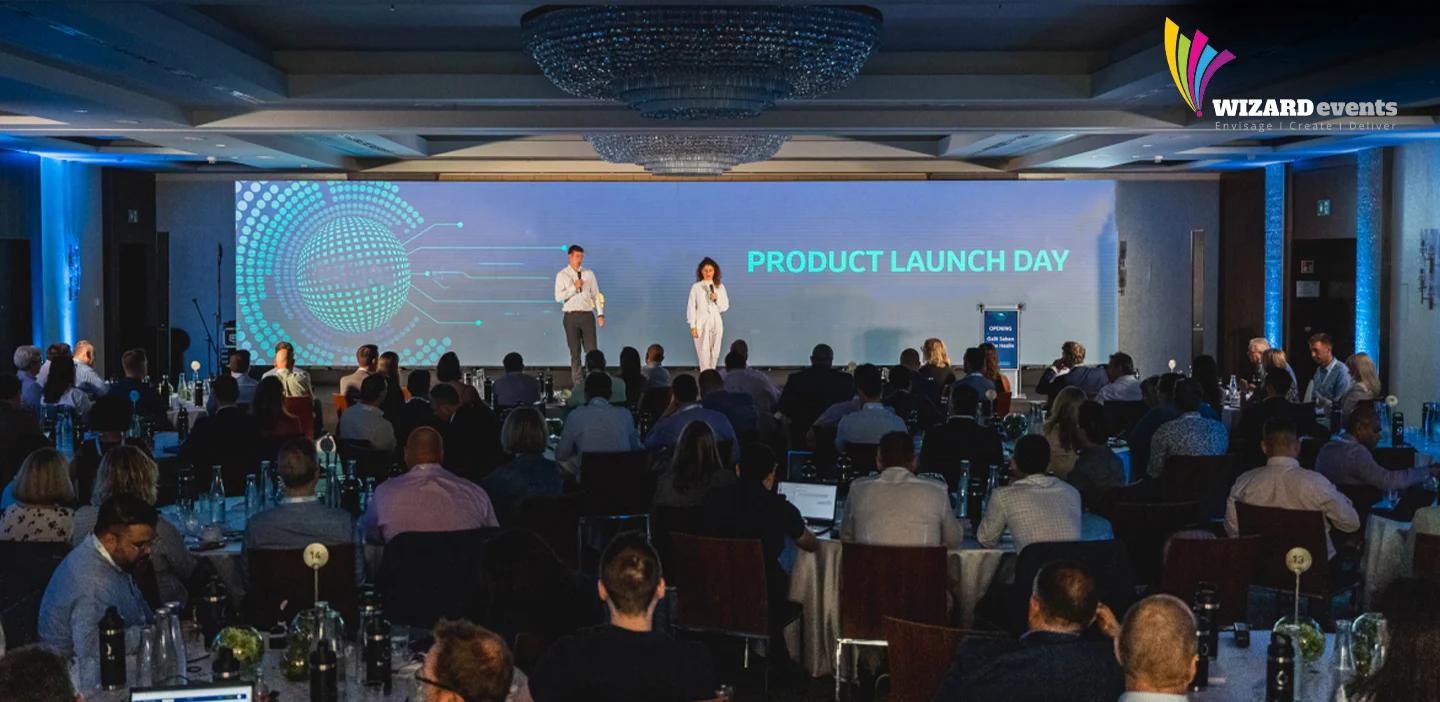
The product should never compete with the event. The event exists to support the product. Run of show. Speaker order. Content pacing. Reveal timing. All of it is designed to lead naturally to the product moment.
The Reveal Is a Moment, Not a Performance
The reveal should feel inevitable. By the time it happens, the audience should already understand the problem and feel ready for the solution. The product should answer a question that has already been set up.
Research from Harvard Business Review shows that launches focusing on clarity and relevance outperform those relying heavily on theatrics.
This is where experienced product launch organisers stand apart. They know when to step back and let the product speak.
What Happens After the Applause Matters More
Many launches lose momentum the moment the event ends. Post-launch communication is often rushed or fragmented. Press releases go out. Social posts appear. Sales decks are updated. But the narrative weakens.
According to Bizzabo, brands that follow structured post-event communication see higher message retention and engagement.
Strong corporate product launches treat post-launch activity as a milestone, not an afterthought.
Measuring Success Beyond Headlines
Coverage and attendance are visible metrics. They are not the full picture. Better indicators include sales readiness, message consistency, stakeholder confidence, and audience understanding.
Mature product launch event management companies close the loop. They review feedback. They study engagement. They refine the next launch. This is how experience compounds.
Why Timelines Outlast Trends
Trends will change. Hybrid formats. Immersive tech. New platforms. New tools. Timelines do not change. A clear launch journey respects attention. It builds trust. It allows messages to land properly.
This is why experienced product launch organisers care more about milestones than gimmicks.
The Value of Experience in Product Launches
A product launch sits between brand, business, and people. Managing that intersection takes judgment. Not just creativity. Professional product launch event management companies bring perspective earned through repetition. They know what can go wrong and how to prevent it.
That experience turns launches into business moments, not just calendar entries.
Closing Thought
A strong product deserves a strong journey.From teaser to reveal, every phase exists for a reason. Wizard Events When timelines are respected, launches feel confident and credible. In crowded markets, structure creates space for impact.