13 Oct, 2026
29 Jun, 2026
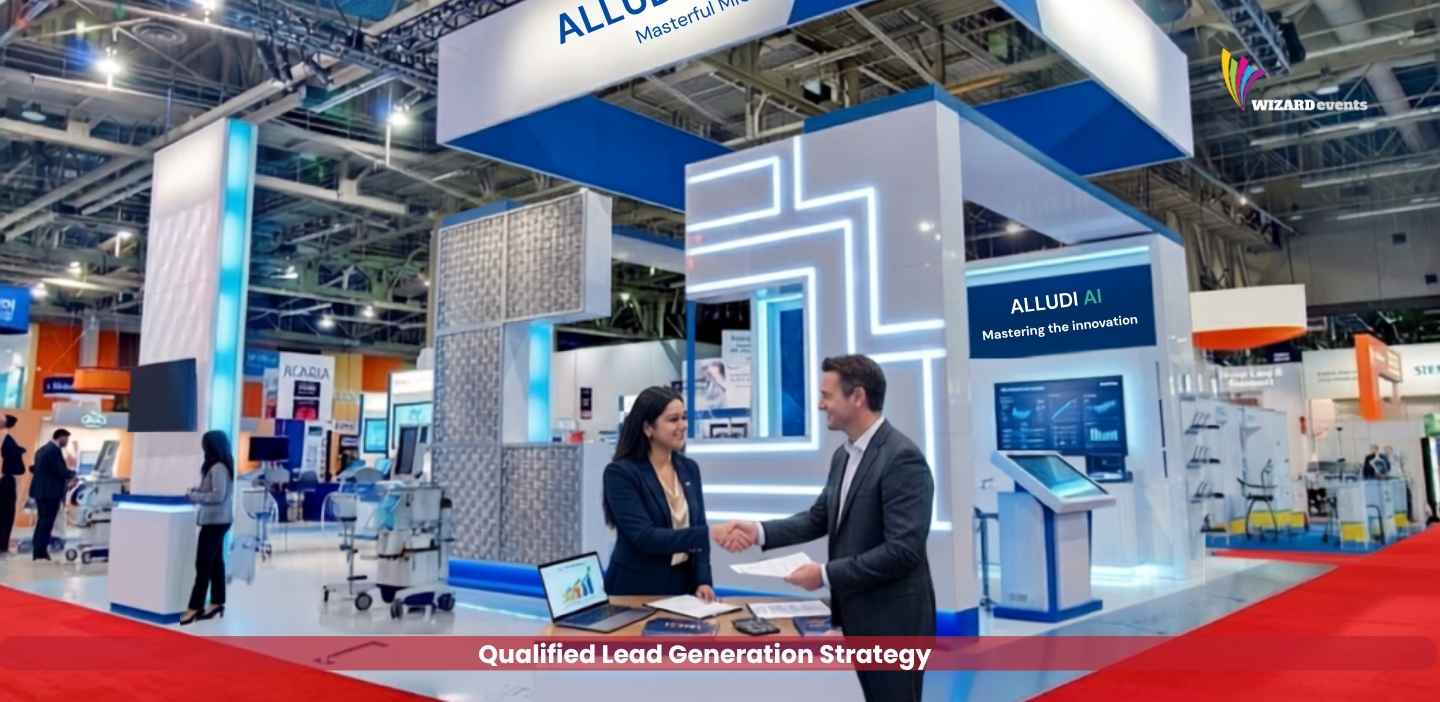
The quickest way to produce qualified B2B leads at a trade show is to stop considering it as a presence exercise and instead approach it as a sales system. Brands that routinely walk away from shows with warm, convertible leads do not leave anything to chance; they plan every aspect of their exhibition experience to attract, engage, and capture the ideal individuals before, during, and after the event. Here are seven effective techniques, supported by research and designed specifically for the Indian show business.
Why Trade Shows Still Deliver the Best Qualified Leads in B2B Marketing
Trade exhibitions generate higher-quality leads than nearly any other marketing channel because the audience chooses them. They are not passive scrollers who stumbled upon your ad. They paid to attend, set aside time in their calendar, and went into an industry-specific room because they are actively seeking solutions.
The data clearly demonstrates this. According to the Center for Exhibition Industry Research, 81% of trade show participants have purchasing authority, which means that the person present at your booth is most likely the one who signs the purchase order. Converting a trade show lead costs 38% less than doing sales calls alone. 74% of trade show attendees believe that meaningful contact with exhibitors boosts their chances of making a purchase.
For Indian brands — especially in sectors like technology, pharma, manufacturing, and FMCG — trade shows and exhibitions remain the most concentrated gathering of decision-makers available. The question is not whether to exhibit. The question is how to make every rupee of exhibition spend work harder.
How Do Brands Generate Qualified Leads at Trade Shows?
1. Start Lead Generation Before the Exhibition Opens
Brands that invest in pre-show outreach generate up to 46% more booth visitors than those that only market on the day. Pre-show strategy means identifying who is attending, reaching them before the event begins, and giving them a specific reason to visit your booth rather than a competitor's.
This includes personalised email campaigns to your existing prospect list, LinkedIn outreach to confirmed attendees, early appointment scheduling with key targets, and social media teasers that build anticipation around what your booth will offer. The goal is to arrive at the exhibition with a booked calendar of meaningful conversations — not to hope the right people happen to walk by.
2. Design Your Booth Experience Around Conversation — Not Just Display
The booth is not a showroom. It is a conversation starter. Brands that generate the strongest leads at trade shows design their booth experience to pull people in, create a reason to linger, and make the transition from curious visitor to qualified prospect feel natural rather than forced.
This means interactive product demonstrations over static displays, open-layout designs that invite entry rather than barrier-style counters that repel it, and trained booth staff who ask questions rather than delivering monologues. According to industry research, 48% of trade show attendees are attracted to eye-catching stands — but what makes them stay is a conversation that feels relevant to their specific problem.
As a corporate event planning company in Delhi with pan-India exhibition experience, Wizard Events helps brands design booth experiences that are built for conversion — not just for attention.
3. Use a Lead Capture System That Preserves Context
One of the biggest mistakes brands make at exhibitions is capturing a badge scan or a business card and calling it a lead. A name and a phone number with zero context is not a lead — it is a contact. A qualified lead has a note attached: what problem they are trying to solve, what their timeline is, what level of decision-making authority they hold.
According to 2025 data, 80% of trade show leads are never followed up on — and the primary reason is that teams cannot remember the context of the conversation by the time they return to the office. Use a structured digital capture tool — even a simple form on a tablet — that records the conversation summary, the prospect's specific interest, and a clear next action. This single habit separates the brands that generate pipeline from exhibitions and the ones that generate business card collections.
4. Build a VIP Engagement Zone Inside Your Exhibition Space
The open booth works for broad awareness. But your highest-value prospects — the ones with real purchasing authority — need a different experience. Brands that consistently close deals from trade shows create a dedicated VIP space within or adjacent to their booth: a private meeting room, a hospitality lounge, or a by-invitation-only briefing area where focused, distraction-free conversations happen.
This is where brand activation at industry events strategy overlaps with trade show execution — the most effective exhibitions are designed in layers, with a public-facing experience for broad engagement and a private layer for high-value prospect conversations.
5. Train Your Booth Staff to Qualify — Not Just Engage
The most beautifully designed booth with the wrong people staffing it will generate low-quality leads. Booth staff training is consistently one of the most underinvested elements of exhibition planning — and it is one of the highest-leverage places to improve lead quality immediately.
Train your team on three things before every exhibition: how to open a conversation naturally without being pushy, how to ask two or three qualifying questions that reveal buying intent and timeline, and how to exit a conversation gracefully when a visitor is not a qualified prospect. Time at a trade show is finite. Every conversation with a cold visitor is time not spent with a warm one.
6. Create a Post-Show Follow-Up System Before the Show Starts
Research consistently shows that 52% of exhibitors achieve significantly better lead nurturing outcomes when they follow up within 48 hours of first contact. Yet 40% of exhibitors wait three to five days after an exhibition before following up — and by then, the lead has already had three conversations with your competitors.
Build your follow-up sequence before the exhibition begins. Write the email templates. Set the CRM workflow. Assign lead ownership to specific sales team members. When the exhibition closes, your team should be following up within 24 hours — not writing emails from scratch the following week.
For companies planning large-scale MICE programmes that include trade shows and conferences as part of an integrated event calendar, working with an experienced MICE event company in Delhi ensures the post-event systems are as carefully planned as the event itself.
7. Measure What Actually Matters — Not Just Booth Traffic
Foot traffic is a vanity metric. The only metrics that tell you whether your exhibition investment is working are cost per qualified lead, lead-to-opportunity conversion rate, and revenue attributed to exhibition contacts within 90 days.
Fortune 500 companies that achieve a 5:1 ROI from trade shows are not doing so because they had the biggest booth. They are doing so because they measure ruthlessly, iterate between events, and treat every exhibition as a data-generating exercise as much as a brand-building one.
Track every lead source. Know which booth interaction produced which pipeline opportunity. Know which pre-show outreach sequence drove the most appointment bookings. Use this data to make every subsequent exhibition smarter than the last.
How Do You Plan a Trade Show or Exhibition in India?
Planning a successful show in India entails balancing venue selection, regulatory permissions, logistics coordination, booth design, vendor management, and on-site execution. India's three major exhibition venues — Pragati Maidan in Delhi, Bombay Exhibition Centre in Mumbai, and BIEC in Bengaluru — each have their own set of operational restrictions, approved vendor lists, and booking systems that necessitate at least 8 to 12 weeks of prior planning for a well-produced exposition.
The most common mistake brands make when planning exhibitions in India is underestimating the logistics complexity and overestimating their internal team's bandwidth to manage it. This is precisely why most enterprise brands work with a specialist event partner — not just for booth design, but for the complete exhibition management system from brief to close.
Wizard Events plans and executes trade shows and corporate exhibitions across India — managing venue liaison, booth production, on-ground logistics, staff briefing, and post-event coordination as one integrated team. Whether you are launching a product at a major trade event or building a pan-India exhibition presence for your brand, we design the experience around your lead generation objective — not around what looks good in the floor plan.
Conclusion: The Right Exhibition Strategy Pays for Itself
Trade shows and exhibitions remain one of the highest-ROI investments in B2B marketing when they are planned with a lead generation system — not just a presence strategy. The seven approaches in this blog are not complex. They are simply not commonly implemented together in the same exhibition plan.
If your brand is planning a trade show appearance or corporate exhibition in India and you want to walk away with a pipeline rather than a pile of business cards, the conversation starts with how the experience is designed — not how the booth looks.