
13 Oct, 2026
25 Mar, 2026
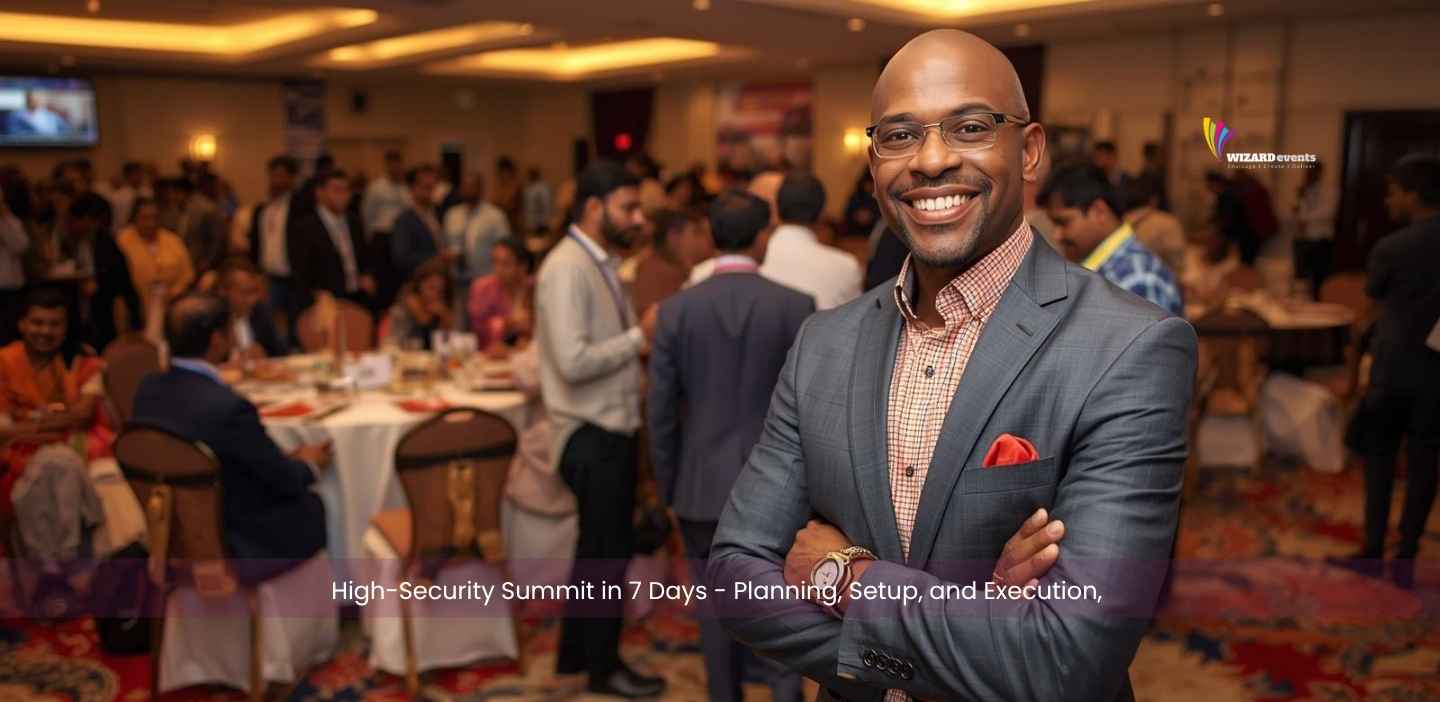
When a client calls and says, "We need a high-security summit ready in seven days," most event companies hesitate. We said yes.
That call led to our involvement in the BharatGI AI Summit 2026 — one of India's most high-profile AI gatherings of the year, demanding ministerial-level security protocols, seamless delegate management, and zero margin for error. Here is exactly how we pulled it off, and what every organiser needs to know before they attempt to plan a high-security summit under pressure.
Why High-Security Summit Planning Is Different
A regular corporate conference allows you to iterate. A high-security summit does not. When your attendees include government officials, global tech leaders, and policy architects, every element — from access control to AV redundancy — carries real stakes.
The moment you agree to plan a high-security summit, the entire event planning checklist shifts. Venue verification, intelligence-grade entry protocols, and coordinated security briefings move to the top, not the bottom, of your workflow. We learned this on Day 1.
The 7-Day Plan: How We Make a High Security Corporate Event Successful
Day 1–2: Brief, Lock, and Secure the Venue
The first 48 hours are the most critical when you plan a high-security summit on a tight timeline. We secured the venue contract, conducted an immediate site security audit, and mapped all entry and exit points. We coordinated with the client's security team to define VVIP zones, press areas, and delegate-only corridors.
Most event companies underestimate how long venue security alignment takes. We do not. As one of the experienced event management companies in Delhi, we have established relationships with premium venues that already meet high-security compliance standards, which cut Day 1–2 timelines significantly.
Day 3–4: Logistics, Accreditation, and Technical Setup
We built the full delegate accreditation system — tiered access passes, RFID wristbands for restricted zones, and a real-time check-in dashboard for the security team. Simultaneously, our AV and technical crew began the conference security protocol for all communication systems: encrypted briefing lines, backup power for stage and main hall, and redundant internet infrastructure.
Day 5–6: Dry Run, Brief All Teams, and Contingency Lock-In
Every security summit needs a full dress rehearsal 24 to 48 hours before the event. We ran two dry runs — one for the delegate entry flow and one for the VVIP arrival sequence. All on-ground staff received written briefing documents and attended a 90-minute coordination call covering emergency protocols and escalation chains.
For clients planning government summits or high-profile AI conferences in the NCR region, we also recommend engaging mice company in Delhi that carry experience handling ministerial and diplomatic-level logistics — because the gap between "large event" and "secure event" is significant.
Day 7: Execution
The summit ran on schedule. Zero security incidents. All delegates cleared within planned timeslots. The client's post-event feedback cited seamless coordination and professional on-ground presence as the top differentiators. See how the team celebrated the moment live → [View our AI Summit 2026 post on LinkedIn]
What Makes a Summit Truly "High-Security"?
If you need to plan a high-security summit, these five elements are non-negotiable:
Layered access control — not just one checkpoint, but tiered zones with different credentials for media, delegates, speakers, and staff. Pre-vetted vendor lists — every caterer, AV technician, and decorator must be background-checked and badged. On-site security command — a dedicated coordination point that communicates with all teams in real time. Communication protocol — encrypted channels for the core team, never public tools. Contingency scenarios — documented responses for medical emergencies, uninvited guests, and technical failures.
These are not extras. They are the foundation of any successful VVIP event management operation.
The Bigger Picture: India's AI Summit Moment
The India AI Impact Summit 2026, held in February 2026 at Bharat Mandapam, New Delhi, drew approximately six lakh in-person attendees and over nine lakh cumulative virtual views, with delegations from more than 100 countries. Events at this scale prove one thing: India is ready to host world-class, high-security summits — but only when the right event management partner is behind the logistics - Press Information Bureau.
Even at the official India AI Impact Summit, media and delegates reported confusion at entry points and conflicting instructions from security — a reminder that even well-funded events fail without tight coordination between organiser and security teams. Execution quality matters as much as infrastructure.
Should You Plan a High-Security Summit Without an Expert?
The short answer is no. High-security event planning in India involves navigating venue compliance, coordinating with local authorities, managing multi-tier delegate flows, and maintaining real-time communication across dozens of vendors — all simultaneously.
Whether you are planning a national-level AI conference, a ministerial roundtable, or a corporate summit with global CEOs, you need a partner that has done this before. Teams working across Delhi, NCR, and Bengaluru — like our network, which includes seasoned professionals operating as an pan India corporate event planner — bring the operational muscle that tight-timeline summits demand.
We planned a high-security summit in seven days. The AI Summit 2026 is proof. When you are ready to do the same, you know where to find us.